Blog

All Rancho Mirage Group Dealer Automotive News indiGO Auto Group indiGO Auto Group News BMW Ferrari Audi indiGO Auto Group Service Rolls-Royce indiGO Auto Group Events Porsche Volkswagen Bentley Lamborghini Rancho Mirage Group Service Rimac Nevera Aston Martin Bentley Events McLaren Lamborghini - Houston Events Rimac Bugatti Jaguar Land Rover BMW Events Porsche - Rancho Mirage Events
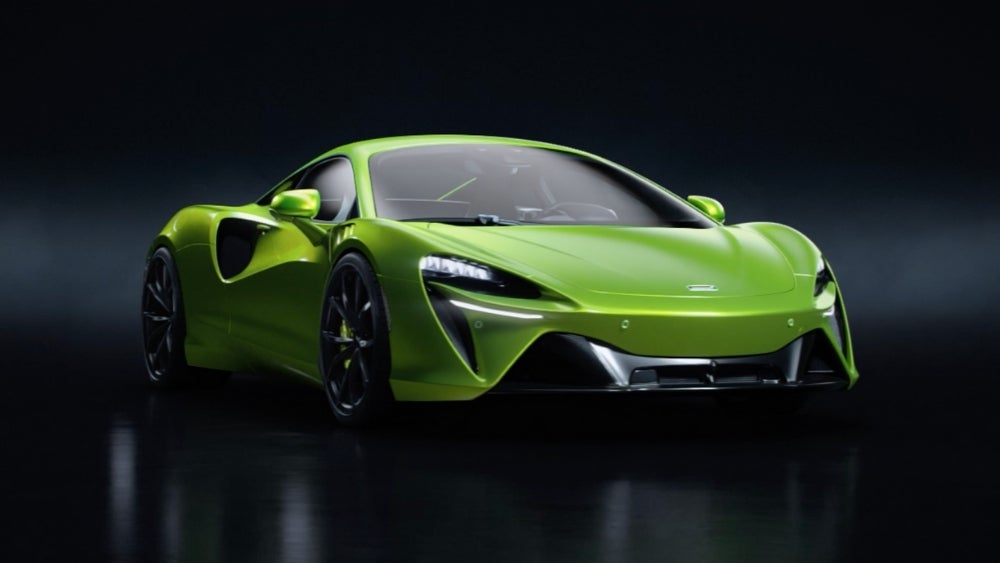
McLaren Artura Supercar

Five Features that Make the McLaren Artura Great

The Thrill of a Lifetime: The McClaren Artura is a High Performance Hybrid Super Car It’s low and lean, minimal yet powerful. The Artura is in fact a new interpretation of all things McLaren, a high performance hybrid super car that has more than earned its reputation for greatness. From managing airflow and heat, to achieving an ultra-low center of gravity - and even enabling the perfect driving position – every single curve of the Artura exists for a reason. That seamless, sculpted feel is made possible thanks to magnificent engineering. Think cutting edge carbon fiber expertise and advanced techniques like “superforming.” The end result is beautiful functionality, that also functions beautifully. So let’s take a closer look at five features that make the McLaren Artura great. 1. McLaren started with a clean sheet. McLaren Carbon Fibre Lightweight Architecture (MCLA) is at the core of the car’s design. Also brand new is the High-Performance Hybrid powertrain. All of this means one thing: Aerodynamic efficiency that is more advanced than ever. Helping to shape a minimal, beautiful new design. From the rear suspension to the advanced E-differential, every new element contributes to a uniquely intense driving experience. Ultra-light engineering. Blistering electrified power. Sublime agility and engagement. McLaren to the core. For the next generation. 2. It’s relentlessly innovative. In fact, innovation is at the center of McLaren DNA. And it’s that DNA that shaped the Artura from the ground up. To redefine the supercar, every core element was fearlessly rethought. This pioneering, technical innovation has enabled incredible performance. And new heights of handling precision. Balanced with exquisite attention to detail, driver focused technology and the ability to travel in electric-only urban mode. 3. Ultra-light engineering. Artura is defined by ultra-light engineering. Innovative, immensely strong and weighing just 82kg, the monocoque at the heart of our McLaren Carbon Fiber Lightweight Architecture (MCLA) is the car’s pioneering new platform. Built with incredible precision, it uses four new kinds of carbon fibre, a new resin system and new core material to deliver market-leading strength and stiffness. 4. The engine. The all-new twin turbocharged V6 petrol engine generates 585PS. Throttle response is incredibly sharp and puts it squarely at the front of its class. With the 95PS E-Motor, you enjoy massive instant torque for stunning acceleration totaling 680PS of seamless performance. The Artura E-Motor’s instant torque provides throttle response that’s two times as fast as McLaren’s pure petrol cars – seamlessly transitioning to the V6 engine to deliver a torrent of power from standstill. 5. The cockpit design. The innovative cockpit design brings powertrain and handling control switches to your fingertips - keeping your hands on the wheel, and eyes on the road. Electro-hydraulic steering provides optimum feedback. Infotainment and connectivity deepen your engagement too – including new HD touchscreens, Apple CarPlay® and Android Auto™ capability. The Artura is the most radically new McLaren since the 2011 MP4-12C. Everything from its carbon tub, to its engine, to its hybrid transmission's electric motor, and even its refreshingly non-numeric moniker has been clean-sheet reimagined. The 2022 McLaren Artura aims to introduce the throttle responsiveness and silent city-center operation (not to mention 129 g/km CO2 emissions compliance) that electrification promises, but with little or no weight penalty relative to its pure-petrol competitors. Check out our new McLaren inventory.

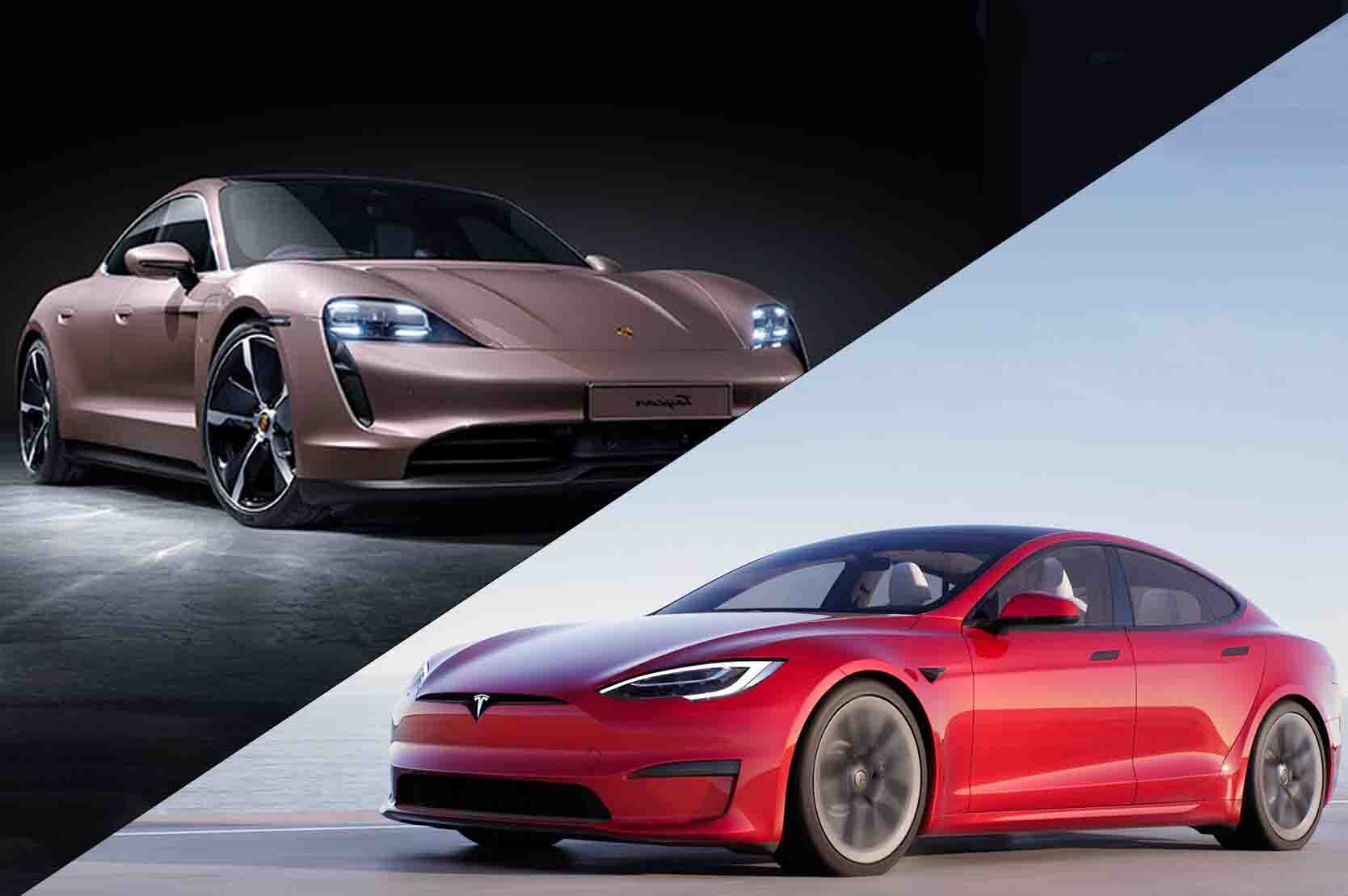
Tesla Model S vs Porsche Taycan

Tesla Model S vs Porsche Taycan

EV Titans Go Head to Head So which is better: The Tesla Model S or the Porsche Taycan? Is the Taycan really better than a Tesla Model S? Let's look at the Tesla Model S vs Porsche Taycan. That’s one of the first questions people ask when they hear about the all-electric Porsche Taycan. In fact, one dealership in Canada has been so comfortable with that question that it’s actually lending out a Taycan so people can compare it alongside the 4S.So what’s the deal? Is Tesla’s range really that much better than other comparable EVs?  And is the Taycan so fabulous in terms of design and handling that it’s worth the price? According to Greencar.com, the two mighty gladiators of EVs are going toe-to-toe and only one is coming out the winner. So which one should you buy? Greencar did what it calls a good old-fashioned “shootout” between the two luxury EVs. They focused on range, charging, acceleration, handling and interior/exterior design as well as price and value for your money. Here’s what they and other bloggers have found: Range and Charging The benchmark for charging of electric cars is thought to be 200 miles between charges. That gives you plenty of miles for getting to and from work, running errands and leisure driving. Unreliable EPA ratings aside, the auto blogs have reported the Taycan will go anywhere up to 300 miles between charges. Tesla Model S Long Range Plus mode, on the other hand, has a range of up to 391 miles. But while Tesla may win for range, both cars are getting easier and easier to charge. Porsche, for instance, has installed high-speed chargers at all of its dealerships and has partnered with Electrify America to provide over 1,700 chargers at 350 stations all across the United States. Acceleration Both cars are two of the quickest on the road. When it comes to acceleration they are both faster than the fastest race cars and super cars thanks to those high-powered electric motors. Both offer amazing zero to 60 mph times. The Taycan Turbo S will take you from zero to 60mph in 2.6 seconds, though Motor Trend and others have clocked it at 2.4 seconds. The Tesla comes in at 2.3 seconds – so just a tiny difference. Handling Here’s where things get interesting. Nothing Tesla has done to improve its drive in the last few years can touch Porsche’s superior handling derived from decades of German engineering. So according to Greencar and others, the Taycan is by far the more rewarding car to drive. And on twists and turns the Taycan always feels solid despite its 5,100 pounds of weight compared to the Tesla’s 4,900 pounds. So for handling and agility Porsche takes the lead here. Design When it comes to design the Taycan is a blast of fresh air borrowing a bit from another Porsche, the Panamera. The Taycan is edgier than the Tesla and features the biggest brakes – both rotors and calipers. The exterior of the 4S has been around for awhile and is starting to look a bit staid by comparison. And on the inside, the Taycan is the clear winner, according to Greencar. It’s got perfectly ergonomic leather seats and ample room for four adults, and the Turbo S also sports a gorgeous tinted glass roof and superior design throughout. From a technology perspective you’ll love having more than 41″ of digital displays and controls throughout your world-class cabin – something not true with the Tesla. And the Porsche Taycan gives you nearly two dozen leather and Race-Tex color combinations for your seat surfaces. If you prefer limited pleather seating in black, white, or tan, then the Tesla Model S might work fine. So Porsche takes this round as well. Price The Taycan 4S begins at $103,800 plus delivery charges. Options such as Porsche’s InnoDrive active safety suite will cost an additional $3,600 and the performance package increases the price by $6,400 – so your total is going to be closer to $113,800 with those options. Also, there are many more available from Porsche to enhance your Taycan. The Base Tesla Model S Long Range starts at $79,990 plus delivery. But there are far fewer options to add to a Tesla compared to the Porsche. According to Greencar’s tally: Premium paint, interior and wheels will add $8,500 while the addition of Tesla’s self-driving tech is another $8,000. That brings the total to about $96,490. However, the Porsche Taycan is the more premium looking and handling car by far. And you can expect to pay a little extra for that superior design. “If price were no object, we’d all be driving the new Taycan,” Greencar concludes. Fun fact: Dr. Ferdinand Porsche and Nikola Tesla were peers. They lived and did their research work at the same time very close to one another in Germany and Austria. And while Nikola Tesla is known for his work with semiconductors, he is the famous namesake for the popular EV known as the Tesla.  What you may not know is that Dr. Ferdinand Porsche beat Tesla to the EV market by approximately 120 years. In fact, the first Porsche ever made was the Porsche P1 EV in 1898.  What else does Porsche offer you that Tesla does not? A signature brand value of the German automaker is the care that designers take to make you feel like a god when you are behind the wheel.  Moreover you can personalize your 2021 Porsche Taycan with other incredible features like adaptive seating, massage seating, and a palette of 17 exterior colors, including favorites like Carrara White, Frozen Berry, and Miami Blue, among others. Tesla offers you only five color choices. With the Taycan, you get eight wheel options. With Tesla that number comes down to two.  While Nikola Tesla was known for his work on high-powered semiconductors, Porsche edges out the Model S when it comes to charging speed. At a rapid-charging station, the Porsche Taycan can recharge from zero to 80 percent capacity in as little as 22 minutes. The Tesla Model S takes about 30 minutes to do the same.According to some media reports Tesla promises anywhere between 400 and 500 miles of cruising range.1 However, recent third-party testing shows that real-world results are about half of that. The Porsche Taycan is estimated by the EPA to offer a conclusive and repeatable 201 miles of cruising. So when it comes down to it you’ll have to ask yourself if you’re actually getting what you’re paying for? Check out our Porsche Taycan for sale inventory.

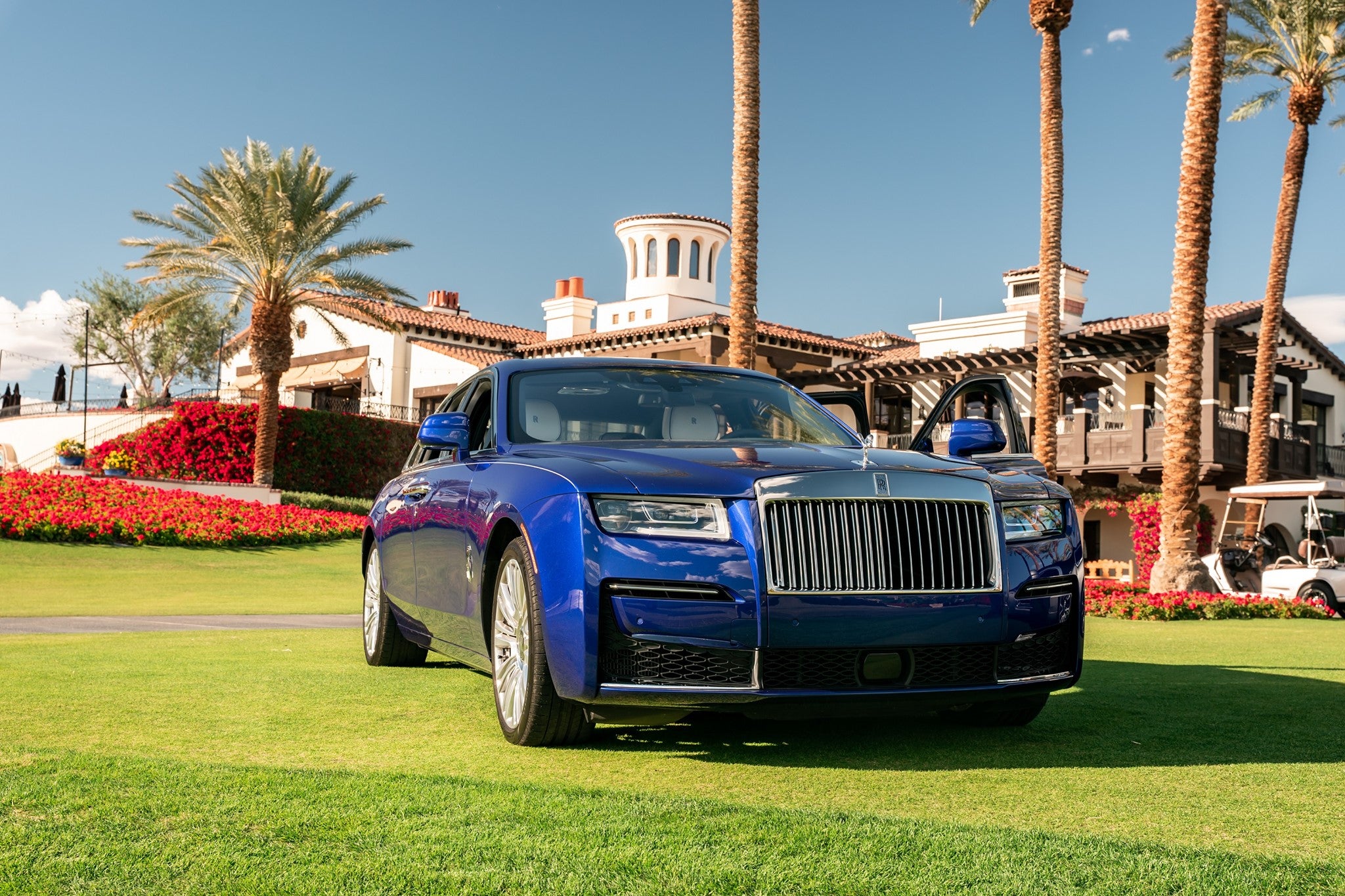
Rolls-Royce Ghost for Sale

Rolls-Royce Ghost: The Minimalist Rolls-Royce

Is the Rolls-Royce Ghost a minimalist Rolls-Royce? Well, sort of. If there ever was such a thing as an understated Rolls-Royce, the Ghost might be it, at least according to the British luxury carmaker.  Rolls-Royce’s freshly designed Rolls-Royce Ghost displays a design aesthetic the automaker describes as “post-opulence (that) rejects superficial expressions of wealth.” Starting at $311,900 the Ghost is built on the company’s Architecture of Luxury platform with all-wheel drive and optical road-reading suspension. It’s lighter, stronger and stiffer than other Rolls. But don’t expect a Prius. The Spirit of Ecstasy hood ornament and twin-turbo 6.8-liter V12 are still there and this baby is still 18 feet long, after all, but everything else is slightly less ostentatious thanks to a mission that “reflects an evolved appreciation of luxury, one defined by minimalism and purity,” according to Rolls-Royce. Among the features that make the Rolls-Royce Ghost a less opulent but just-as-luxurious Rolls-Royce: A subtle lower side-body line that visually lowers the car and plays off of a tapered rear that seems to make the car look less massive than most Rolls. Scallops in the roof and hood also help pair down and streamline the aesthetic. Rain gutters are invisible, further reducing the fuss. An equally clean-lined interior filled with unembellished metal, wood and leather. A green-leaning MicroEnvironment Purification System to remove the contaminants coming in from the outside world. Hot/cold selectors that are rotary and mechanical rather than high tech gadgetry found in other luxury automobiles Don’t be fooled into thinking the Ghost is about roughing it. In fact, the Ghost has plenty of luxury features, including spaciousness. The new car's overall length has grown by 3.5 inches to 218.3 inches, and its width has increased by 1.2 inches to 77.9 inches. The Ghost retains rear-hinged "coach" doors at the back and they have a power-closing function.  And it’s luxuriously quiet. Rolls used more than 220 pounds of acoustic damping along with double glazing and felt insulation to keep noise down inside the Ghost.  And the greatest luxury can be found in the tiniest details. For instance, the stitching on the edge of the instrument panel, where each stich is angled at 45 degrees before being perfectly aligned with the rest of the design, shows that familiar Rolls attention to detail. The interior contains just under 340 individual pieces of leather and hyper plush carpeting throughout. The showpiece starlight headliner remains and comprises 1,000 fiber optic cables placed and cut by hand to look like a starry night sky. And don’t forget that the 2021 Ghost is the most technologically advanced Rolls-Royce to date.  Built on aluminum Rolls-Royce architecture the new Ghost has all-wheel drive and all-wheel steering for unprecedented agility and performance. The 2021 Ghost can get to 60 mph in just 4.6 seconds while offering sharper driving thanks to an all-wheel-steering system and 50/50 weight. It’s everything you expect from the most popular Rolls-Royce with some new flourishes and technology designed to delight a new generation of customers. Other features of the Rolls-Royce Ghost include: Passenger comfort Rear passengers are treated to luxuries including massaging seats, their own entertainment system and an abundance of leg room. Infotainment and connectivity The Ghost has its own Wifi hot spot and features a large infotainment touchscreen with in-dash navigation. Sonics Rolls-Royce also supplies an 18-speaker Bespoke stereo system with 1300 watts of power and magnesium-ceramic speaker cones. Umbrella Stored within its iconic rear doors is the cherished Rolls-Royce umbrella - true emblem of style. So those seeking luxury will find it even if it is a down-stated luxury when compared to other Rolls-Royce automobiles. And if you upgrade to the Black Badge Ghost model you gain an additional 40-hp. All versions have a top speed of 155 mph.  The Ghost's incomparable suspension always makes for an uber-comfortable ride. Road trip, anyone? Check out our Rolls-Royce inventory.

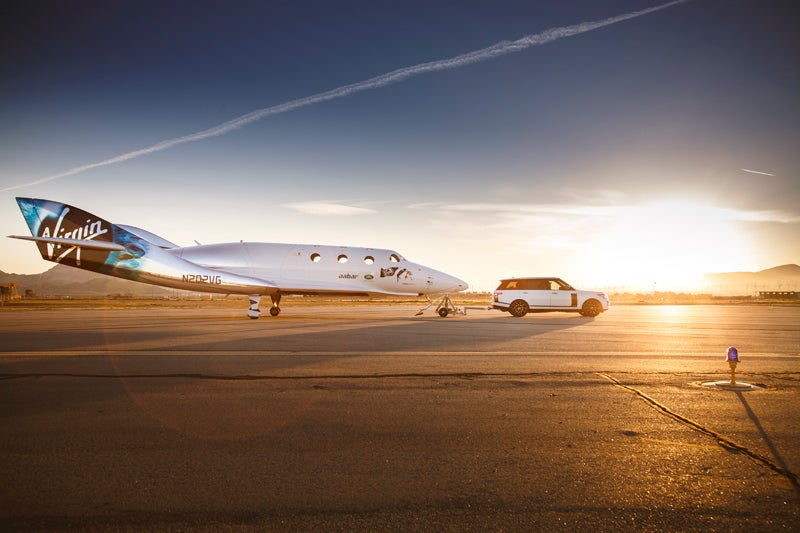
Virgin Galactic VSS Unity with Range Rover Autobiography

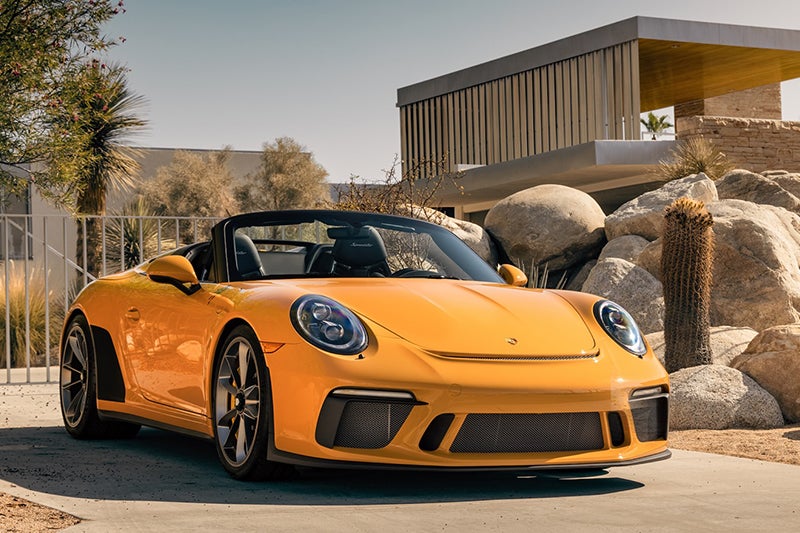
Which Luxury Convertibles are the Best?

Ultimate Freedom: Put Down the Top and Let the Sun and Wind Hit Your Skin. That’s Right: It’s Convertible Time – But Which Luxury Convertibles are the Best of the Best? The convertible is the ultimate warm-weather car. Whether you choose a folding hard top or a retractable canvas top, putting down your car’s roof is sure to put you in the summertime vibe. While a soft top is considered less secure and more susceptible to damage than a hardtop many of us have fond memories of these classic cloth convertibles and simply prefer the aesthetic. Folding hardtops don’t come with these concerns, but the mechanisms can be complicated. For these and other reasons – No. 1 being the prevalence of SUVs and pickups – the number of available convertibles has dwindled from their heyday in the mid-twentieth century. But for convertible lovers there’s simply nothing better - or sexier - when it comes to a summertime drive. You get to have the sun on your skin and the wind in your hair and experience the elements in a way that no other type of car affords. Recently we examined Forbes’ list of the best Convertibles for 2021 and decided to highlight a few of our own favorites from that list. Because of the relatively small number of convertibles on the market, the Forbes list was focused on commonly available models with a base MSRP of under $100,000. Exotic and hypercars were omitted. (We’ll get to those in another blog). Forbes looked at styling, performance, comfort/convenience, safety among other considerations Here’s a few of the convertible models they showcased: Audi A5 Cabriolet Forbes loved the Audi A5 Cabriolet for its sporty handling, aggressive styling and massive sport seats that are standard on the S5. Forbes notes: The A5 offers a choice of three distinct body styles: a two-door coupe, a four-door Sportback hatchback and a summer-time ready Cabriolet. The three style of the A5 come with a a turbocharged 261-horsepower four-cylinder engine tied to a seven-speed dual-clutch automatic transmission. Each one is also available as an S5 performance model, with a larger twin-turbo 361-horsepower V6 paired to an eight-speed automatic. All variants of the A5 or S5 come with all-wheel drive standard. For 2022 the Audi A5 coupe and Cabriolet convertible models more eye-catching than ever. Both A5 body styles are sophisticated, luxurious and athletic. Both the coupe and convertible are powered by a 261-hp turbocharged four-cylinder paired with standard all-wheel drive. And the A5 lineup received a style makeover this past year including a new 19-inch wheel design with all-season tires. The cabin is stylish, sleek and modern – and comfortable. The interior of the Premium Plus includes finely grained, soft-touch plastics as well as aluminum trim and a leather-wrapped steering wheel. It’s also high tech. For instance, a motorized arm pushes the seatbelt forward so it’s within reach of your left shoulder with little effort. There’s plenty of spaces for your phone, water, snacks and other essentials. BMW 2 Series Forbes called this one of BMW’s most “fun offerings” and touted the strong and quick powertrains as well as the animated rear-wheel drive chassis, noting: The BMW 2 Series convertible is a true driver’s car that loves to cut and run at every opportunity. Along with an available all-wheel-drive system, this two-door has two turbocharged engine options: a 255-hp four-cylinder (230i models) and a 382-hp straight-six (M240i). It’s entertaining and fun to drive and has many performance add-ons you can enjoy. It also has a stand-out façade and a modern interior that is surprisingly roomy. Upscale materials and a variety of luxurious features create your dream driving experience: A leather-wrapped steering wheel and three-zone climate control as well as heated front seats and leather upholstery create comfort for you and your passengers as you enjoy that coastal drive. BMW Z4 The BMW Z4 has a “proper blend of class and fun” plus nimble handling and a great soundtrack in the case of the M40i. Forbes notes: Back after a two-year break, the all-new Z4 roadster returned in 2019 poised to defend the maker’s honor in the two-door, two-passenger luxury sports car arena. Born from a partnership between BMW and Toyota, the collaboration likely inspired and pushed BMW engineers to create one of the company’s best-handling cars in years. (Toyota’s end of the deal allowed them to bring back the current Supra, which is essentially a BMW with a different skin.) Whereas the previous-generation Z4 was known better as a posh cruiser, the new Z4 roadster devours curves. Now featuring a soft-top rather than the retractable hardtop of its predecessor, it projects a classic profile graced with touches of modernity with the roof up or down. And we all know there’s nothing better than putting the top down on a nice day and letting the sun and wind hit your face as you head out on your favorite back road. You can choose between a turbocharged four-cylinder or a twin-turbo inline-six. That latter will get you from zero to 60 in just 3.8 seconds. Rear-wheel drive is standard. All models now come standard with SiriusXM satellite radio as well as  Android Auto. BMW has added parking sensors to the optional Driving Assistance package. Jaguar F-TYPE The sculpted exterior, powerful sonic engines and thrilling performance landed the Jaguar F-TYPE on the Forbes list of best convertibles. Forbes: With its muscular styling, precise lines, and range of powerful engines, the refreshed Jaguar F-Type aims to recapture more of the sporting essence of its predecessor, the now long-retired E-Type classic. Available in either coupe or convertible body style, most would argue the two-seater it looks better in the latter. Three engine options and five trims in both body styles: a 296-horsepower turbocharged 2.0-liter four-cylinder that produces 296 horsepower in the base F-Type or First Edition; a 380-horsepower supercharged 3.0-liter V6 capable of 380 horsepower found in the mid-grade R-Dynamic, and a supercharged 5.0-liter V8 engine producing 575 horsepower and 516 pound-feet of torque in the top-of-the-line F-Type R. In short, it is a masterpiece in both convertible and coupe configurations. The Jaguar F-type has an assertive new look that is timeless but also pure and sculpted. It also has the latest technology and a supercharged engine make this the perfect choice for indulging your adventurous streak. Available as a coupe or convertible, the F-type provides not only good looks but agility, performance and adrenaline-pumping speed. The 2021 models sport a new exterior design and a number of interior enhancements, including state-of-the-art infotainment and a digital gauge cluster. The base model has a 296-hp turbocharged four-cylinder engine but you can also choose from a 380-hp supercharged V-6 and a 575-hp supercharged V-8. An optional Climate Pack includes dual-zone automatic climate control and a heated steering wheel along with keyless entry. Eight-speed automatic transmission pairs with all engine options. Both the V-6 and V-8 models have standard all-wheel drive. The four-cylinder version is the most fuel-efficient option (with EPA ratings due out in the coming months). The V-6 coupe and convertible have government estimates of 19 mpg city and 27 mpg on the highway. The V-8 coupe and convertible drop those figures to 16/24 mpg city/highway. The interior is both sumptuous and sexy. Faux-suede accents and chrome trim, aluminum pieces and embossing complete the upscale look depending on the model you choose. The 12.3-inch fully digital gauge cluster dazzles as you drive, providing the latest in infotainment and connectivity. You are the master of this beautiful little universe – one of both beauty and speed. Porsche 718 Spyder It’s lightweight, poised and balance handling earned the 718 Porsche Spyder a place on the list of best convertibles. According to Forbes: The 718 might be the “entry-level” Porsche, but it’s not to be underestimated. It’s small, lightweight and the turbocharged flat-four sits midship, which all adds up to one finely tuned sports car in both Cayman coupe and Boxster roadster trim. Engines range from the base-level 300 horsepower 2.0-liter turbocharged boxer four-cylinder to the 911-sourced 414-horsepower 4.0-liter boxer six-cylinder in the track-focused GT4. If a light, lithe Porsche’s lengthy and intricate option sheets have achieved near-mythical status, and the 718 Cayman and Boxster do little to disrupt the narrative. This is Porsche’s entry-level model but the 718 is still chock full of high performance and nimble handling. If you’re searching for one of the most expertly built sportscars on the market, the Porsche 718 is just the place to start.

BMW Hydrogen Powered Cars

BMW: Hydrogen-Powered Cars May be the Car of the Future

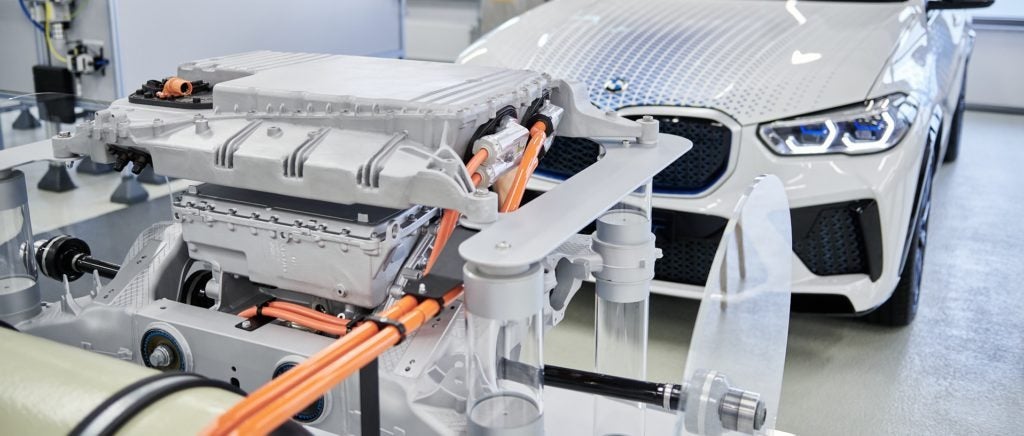
Here’s How BMW Says its Hydrogen-Powered Cars Will Work and Why They May or May Not be for You BMW has begun testing the hydrogen fuel-cell version of its crossover SAV, trying it out on European roads ahead of a small-batch production run next year. In fact, the BMW i Hydrogen Next has already made its debut at the 2019 Frankfurt Motor Show. The hydrogen SUV combines a Toyota fuel-cell stack with fifth-generation electric-motor tech from BMW's latest battery-electric cars – and total system output is 374 horsepower. The output is achieved using both the fuel-cell stack, which produces 170 hp, as well as a battery buffer - which kicks in when accelerating or “overtaking”, according to the website. This is how it works: Hydrogen is stored in two cylindrical tanks, including one that runs down the vehicle's centerline while the other sits beneath the rear-seat area and is made from carbon fiber-reinforced plastic. A refill takes just three to four minutes, BMW says. Here’s a little more in-depth point-by-point look at the hydrogen fuel-cell technology courtesy of BMW: 1.     In the fuel cell of an FCEV, hydrogen and oxygen generate electrical energy. This energy is directed into the electric motor and/or the battery, as needed. In fuel cell technology, something called “reverse electrolysis” process takes place in which hydrogen reacts with oxygen in the fuel cell. 2.     The hydrogen comes from one or more tanks built into the FCEV, while the oxygen comes from the ambient air. The results of this reaction are electrical energy, heat and water, which is emitted through the exhaust as water vapor. Therefore, hydrogen-powered cars are locally emission-free! 3.     The electricity generated in the fuel cell of a hydrogen engine can take two routes. It either flows to the electric motor and powers the FCEV directly or it charges a battery, which stores the energy until it’s needed for the engine. This battery, known as a Peak Power Battery, is significantly smaller and therefore lighter than the battery of a fully electric car, as it’s being constantly recharged by the fuel cell. 4.     Like other e-cars, hydrogen vehicles can also recover or “recuperate” braking energy. The electric motor converts the car’s kinetic energy back into electrical energy and feeds it into the back-up battery. So what are the pros and cons of hydrogen-powered cars for drivers? According to BMW: The pros and cons of a particular propulsion technology can be seen from two main perspectives: that of the user, and that of the environment. “If any technology is to succeed as an alternative to the combustion engine, it must be user-friendly and significantly reduce the emission of pollutants,” according to the German automaker. Let’s further examine the key benefits and disadvantages for drivers/owners of hydrogen fuel cell cars, according to an interview with Axel Rücker, Program Manager Hydrogen Fuel Cell at the BMW Group. Advantages of hydrogen-powered cars for consumers: · Electrical propulsion. The propulsion in hydrogen fuel cell cars is purely electrical. When you drive one, it’s similar to driving a regular electric car. That means there is virtually zero engine noise and a peppy start, due to the fact that these motors provide full torque even at low speeds. · Quick charging time. Depending on the charging station and battery capacity, fully electric vehicles currently require between 30 minutes and several hours for a full charge. The hydrogen tanks of fuel cell cars, however, are full and ready to go again in less than five minutes. For you, the driver, this brings vehicle availability and flexibility to the level of a regular gasoline-powered car. · Longer range. At the moment, hydrogen cars have a longer range than fully electric cars. A full hydrogen tank will last around 300 miles. Battery-powered cars can match this with very large batteries – which in turn will lead to an increase in both vehicle weight and charging times. Also, the range of fuel cell vehicles is not dependent on the outside temperature. In other words, it does not deteriorate in cold weather. Current disadvantages of hydrogen-powered cars for users: Few options for refueling. A hydrogen engine is refueled at special fuel pumps, which in the future will probably find their way into ordinary service stations. For now, there are still very few refueling stations for hydrogen-powered cars. “We have a chicken and egg problem with hydrogen fuel cell technology,” explains BMW expert Rücker. “As long as the network of refueling stations for hydrogen-powered cars is so thin, the low demand from customers will not allow for profitable mass production of fuel cell vehicles. And as long as there are hardly any hydrogen cars on the roads, the operators will only hesitantly expand their refueling station network.” Germany, where BMW is headquartered,  leads the way in terms of infrastructure for hydrogen fuel cell cars. In order to promote the expansion of refueling infrastructure there, BMW and other automakers have joined forces with hydrogen producers and filling station operators in the Clean Energy Partnership initiative, which plans to expand the hydrogen fueling station network to 130 stations by 2022. That would allow the operation of about 60,000 hydrogen cars on Germany’s roads. The next target, with a corresponding increase in fuel cell vehicles, will be 400 stations by 2025. More fueling stations are also needed in neighboring countries to actually make it possible to travel outside Germany via FCEV, according to Rücker. So with all this said, how much do hydrogen-powered cars cost – and why? In addition to the sparse fueling station network, there is another reason for the as of yet low demand for hydrogen fuel cell cars: they are relatively expensive. The few models of fuel cell vehicles already available on the market cost around $80,000 for a mid- or upper-mid-range vehicle. That’s almost twice as much as comparable fully electric or hybrid vehicles. There are a range of reasons why hydrogen fuel cell cars are still expensive. In addition to small volumes, which means that production is still to be industrialized, there’s also the question of the need for the precious metal, platinum, which acts as a catalyst during power generation. The amount of platinum needed for vehicle fuel cells has already been greatly reduced. “The general goal is to bring down the price of hydrogen-powered cars to a similar level to that of other electric cars,” explains Rücker. Another reason for the high purchase price is that hydrogen fuel cell cars tend to be quite large because the hydrogen tank or tanks take up a lot of space.  The drive unit for a purely battery-driven electric vehicle, however, fits into small cars. That’s why classic electric cars can currently be found in every vehicle class. In addition to the cost of purchase, operating costs also play an important role in the cost-effectiveness and acceptance of a propulsion technology. In hydrogen fuel cell cars, these costs are not least dependent on the price of the fuel. At present, 1 lb (0.45 kg) of hydrogen costs around $14 in the U.S., as compared with $4 in Germany (this is the price the H2 Mobility partners have agreed on). An FCEV can drive about 28 miles (45 km) on 1 lb (0.45 kg) of hydrogen. The cost per mile of running hydrogen cars is therefore currently almost twice as high as that of battery-powered vehicles charged at home. Rücker expects these operating costs to converge: “If the demand for hydrogen increases, the price could drop to around USD 2.50/lb (USD 5.60/kg) by 2030.” How environmentally friendly and sustainable is hydrogen fuel cell technology? According to BMW, a car that uses only renewable energy and produces no harmful emissions would be ideal from an environmental point of view. So stay tuned…


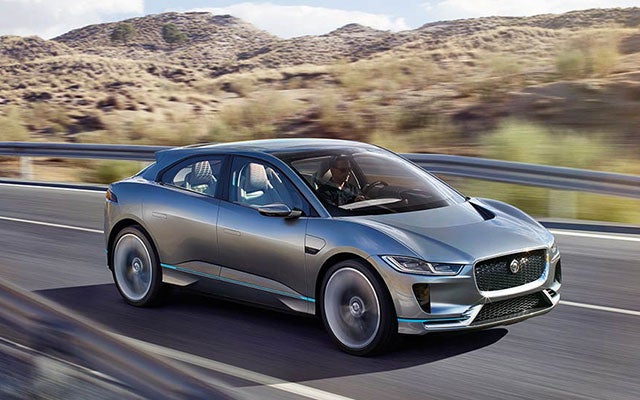
jaguar-i-pace-indigoautogroup

It’s All about Electric Cars

Many are Proclaiming 2021 “the year of the electric vehicle” but What’s Best for You: Electric or Hybrid? Luxury car companies are releasing detailed plans to “go electric” over the next decade. By the end of 2024 alone, a record number of nearly 100 fully electric vehicle (EV) models will have debuted. And several luxury cars, including Jaguar, have announced plans to go fully electric by the year 2025. For consumers that means it can be difficult to keep up with all of the changes and many are left wondering if an EV makes more sense than a hybrid. According to Forbes magazine electric cars are gearing up for record sales this year. According to a new report by the International Energy Agency, EVs, which accounted for 2.6% of global car sales in 2019, saw a 40% increase over the 1.9% share in 2018, according to Forbes. One thing’s for sure: Interest in electric cars is at an all-time high. So if you’re like many others mulling over the leap to electric, you might want to take a closer look at the issues that can impact your decision making. First, the basics. What is the difference between a hybrid and an EV? Plug-in hybrid cars are just what they sound like. They’re hybrid cars that can be plugged in. In plug-in cars there’s two different powertrains, both of which can drive the wheels. There’s an electric motor that lets drivers go a certain limited distance - usually up to 40 miles - and there’s also a conventional gasoline engine that turns on once the electric motor is depleted. Electric vehicles, however, are fully electric and don’t use any gasoline. Because there’s no gasoline engine there’s usually room for batteries and that allow an EV to go longer distances on electricity alone than a hybrid can. Some hybrids charge their batteries using excess energy created as the car decelerates. This is called “regenerative braking.” Others charge them with their combustion engines. There’s also a third type of hybrid automobile called the plug-in hybrid electric vehicle (or PHEV), which allows drivers to also charge the battery pack using an external EV charger. And depending on which EV chargers drivers have in their garage, this can massively reduce fuel costs. With so many new hybrids and EVs on the market, how can you tell which is the way to go? Here is a look at some pros and cons of each. Let’s start with EVs At the top of the  “pro” list is the fact that electric vehicles are better for the environment because they don’t use any fuel at all. Therefore, you are automatically reducing your carbon footprint by driving one. That lack of gasoline also helps you save heaps of money, by the way. EVs also offer a longer electric-only range than plug-in hybrids (we’ll touch on that again later). At the same time, range can be one of the major drawbacks. While a plug-in hybrid can usually only make it 40 miles before the gas engine turns on – and then up to an additional 300 miles on gas – most electric vehicles are limited to a range of about 80 miles, though certain luxury EVs are changing that with ranges over 200 miles. The pros and cons of plug-in hybrids include: Plug-in hybrids, while better for the environment than conventional cars, still use gasoline engines to support their electric engines. The “pro” is that you enjoy electric-vehicle efficiency in town and the longer range of a gasoline engine on those summer drives. The cons include the fact that there is a diminishing market for them since drivers who want to go electric usually want to go fully electric, so there are fewer models to choose from. The good news is that like EVs there are a plethora of savings and tax rebates to be had on both EVs and hybrids. And states that allow alternative-fuel carpool lanes usually allow both plug-hybrids and electric vehicles in those lanes. Still not sure what to do? Here are some other things to consider: Simplicity Hybrids are known for being more efficient than traditional gasoline-powered cars. However, when it comes to efficiency they still don’t to a battery-only electric vehicle. According to Enel X, part of the reason is that an electric vehicle is simply much more simple than a hybrid. An EV usually contains a lithium ion battery that gets recharged as you drive thanks to the magic of “regenerative braking.” Regenerative braking rapidly turns a crank as part of a process called “induction.” The crank then turns gears, the last of which are connected to a long rod (the axles), and the rod turns the wheels. And inside of an electric vehicle you have no ignition, no pistons and no cylinders. While there are hundreds of parts in an internal combustion engine, EVs have just TWO! The simplicity of an EV makes for some major efficiency gains. In fact, the EV is about four times more efficient than gas-powered cars. Cost Between hybrids and EVs, most hybrids still cost less to buy than the average electric vehicle. However, that is rapidly changing as EV prices continue to come down.  Because hybrids have been on the market longer, there are many more types of used models to choose from. However, with the fast-growing inventory of EVs coming on the market you can still find a pre-owned EV at a decent price. Bloomberg NEF predicts that in just two years battery prices are going to drop to where automakers can sell EVs at the same price and profit margin, without subsidies, as ICE vehicles. Range Hybrids of course can drive for several hundred miles before needing a refuel while plug-in hybrids remain gas-dependent for longer trips- so they offer both all-electric ranges and gas-electric ranges which makes them known for convenience.  At the same time the range of fully electric vehicles is getting greater by the day with some luxury models such as the Porsche Taycan capable of traveling over 200 miles before charging is needed. Fuel Cost A 2020 Consumer Reports study found that the typical electric vehicle owner who does the lion’s share of their fueling at home will likely save an average of $800 to $1,000 a year on fueling costs over a similar gas-powered vehicle. Because they are so simple EVs require minimal maintenance, meaning zero tune-ups or oil changes. There’s no spark plug replacements, belt repairs or any of that. The only routine maintenance for an EV is tire care, air conditioning servicing, occasional brake cleaning and fluid testing, and engine coolant flushing, according to Forbe’s magazine. Smooth Ride Electric vehicles are super quiet, smooth to drive and increasingly powerful. In fact, J.D. Power found that 82% of EV owners “definitely” will consider buying another EV once they are in the market for a new one. Hybrids also offer some of the same performance but EVs are now taking over as the cream of the crop. Enel X sums it up this way: “When all the factors are taken together—purchase price, range, refueling costs, maintenance and experience—EVs are simply a better investment. Their net emissions are lower, they require less maintenance, they actually cost less over the lifetime of the vehicle, and they’re just more fun to drive.” So should you buy an electric car now or wait? According to Forbes magazine, if you have plenty of disposable income to put into a new EV and you live in an area with plenty of charging stations this may be the time to make the leap. When you consider available deals and incentives 2021 may just be the year to make the move. Charles Agosta, professor of physics at Clark University told Forbes the time is right.

range rover astronaut edition virgin galactic

Range Rover Astronaut Edition: Designed Exclusively with Virgin Galactic

Calling all Land Rover Loving Future Astronauts! Land Rover Releases the New Range Rover Astronaut Edition. A Special SUV Designed Exclusively for Those who are Scheduled to Blast off Into Space with Virgin Galactic. Land Rover has officially immortalized Virgin Galactic’s July 11 launch with a special edition Range Rover, aka the Astronaut Edition. It’s a highly exclusive Range Rover that celebrates what the automaker calls “the Virgin Galactic Future Astronaut Community” (VGFACs for short) and its contribution to the democratization of space. more Last month at a public event, Gerry McGovern, Land Rover’s Chief design Officer, took Virgin Galactic chief Richard Branson through the design process of the limited-edition “astronaut” commission, which was created by  Land Rover’s Special Vehicle Operations division. Each of the utility vehicle’s major design features represent “future astronauts’” bond with one another, with the spaceship and with history of flight. The Astronaut Edition is also a “manifestation of the values and vision” shared by Land Rover and Virgin Galactic, the companies said in a joint statement. And while the Range Rover Astronaut Edition is available exclusively to the Virgin Galactic Future Astronaut Community (as small as that may be) 2021 is a great year for buying any Land Rover, one of the most rugged and well-made utility vehicles on the planet. The Land Rover Discovery, for instance, is a decidedly upscale utility vehicle that offers impressive off-road capability with plenty of room for up to seven people inside its luxurious three-row cabin. A pair of turbo-charged gas-powered engines – a four-cylinder and six-cylinder – are offered, and all Discovery models come with an adjustable air suspension and standard all-wheel drive. The “Wade” mode improves the Discovery’s water-fording capabilities, something you won’t find in most other luxury SUVs. But if space travel is on your bucket list then look no further than the Astronaut Edition Land Rover. Since Virgin Galactic’s first journey to space several years ago a fleet of Land Rover vehicles has been on the ground at the company’s development and test facilities in Mojave at the Spaceport America in New Mexico. The Rovers provide much-needed support to the Virgin Galactic team as it moves closer and closer to offering regular commercial flights for every-day passengers. The Range Rover Astronaut Edition design combines functionality with a streamlined, elegant beauty. It’s an aesthetic that matches the architecture of Virgin Galactic’s spaceflight system. For instance, the wooden skid which acts as a highly effective, lightweight braking mechanism within SpaceShipTwo’s landing gear, is a perfect representation of this shared ideology. “A part of the skid from a Future Astronauts’ own spaceflight will be engraved and re-fashioned to form an integral part of the Astronaut Edition’s center console,” the companies said in a joint statement. And there are, of course, a plethora of other bespoke features which have been executed by the Special Vehicle Operations Division at Land Rover. Among them: The ‘Zero Gravity’ exterior color, unique to the Astronaut Edition, is a multi-layered paint that mirrors the inky, infinite depths of a star-filled night sky. The Virgin Galactic ‘DNA of Flight’ logo, which showcases the progress of aviation and spaceflight through time, adorns the carbon fiber console drawer lid and is also embossed onto the seat. The story begins with Icarus and ends with Virgin Galactic’s SpaceShipTwo, in case you were wondering. Further detailing takes the form of the iconographical representation of 58 stars in a constellation, one for every nation represented in the future astronaut community. When the doors open, a bespoke puddle lamp switches on to illuminate the ground and shows a silhouette of SpaceShipTwo. The two companies say they are committed to a future of transportation which is both clean and sustainable. To that end, the Astronaut Edition is equipped with Land Rover’s advanced 404hp plug-in hybrid where available. This provides a sustainable solution without compromising performance, experience or design. For now, the Range Rover Astronaut Edition is only available to “future astronauts” - or people who are signed up to go to space on a Virgin Galactic commercial flight. So far, about 700 people have put down $250,000 for a ticket to go to space, with all flights currently sold out for the time being. In the meantime, back down here on earth, we’ve got an enormous inventory of other bespoke Land Rovers that will send your driving experience into the stratosphere. Contact our Land Rover dealerships today for more information: Visit Land Rover Rancho Mirage Visit Land Rover Riverside

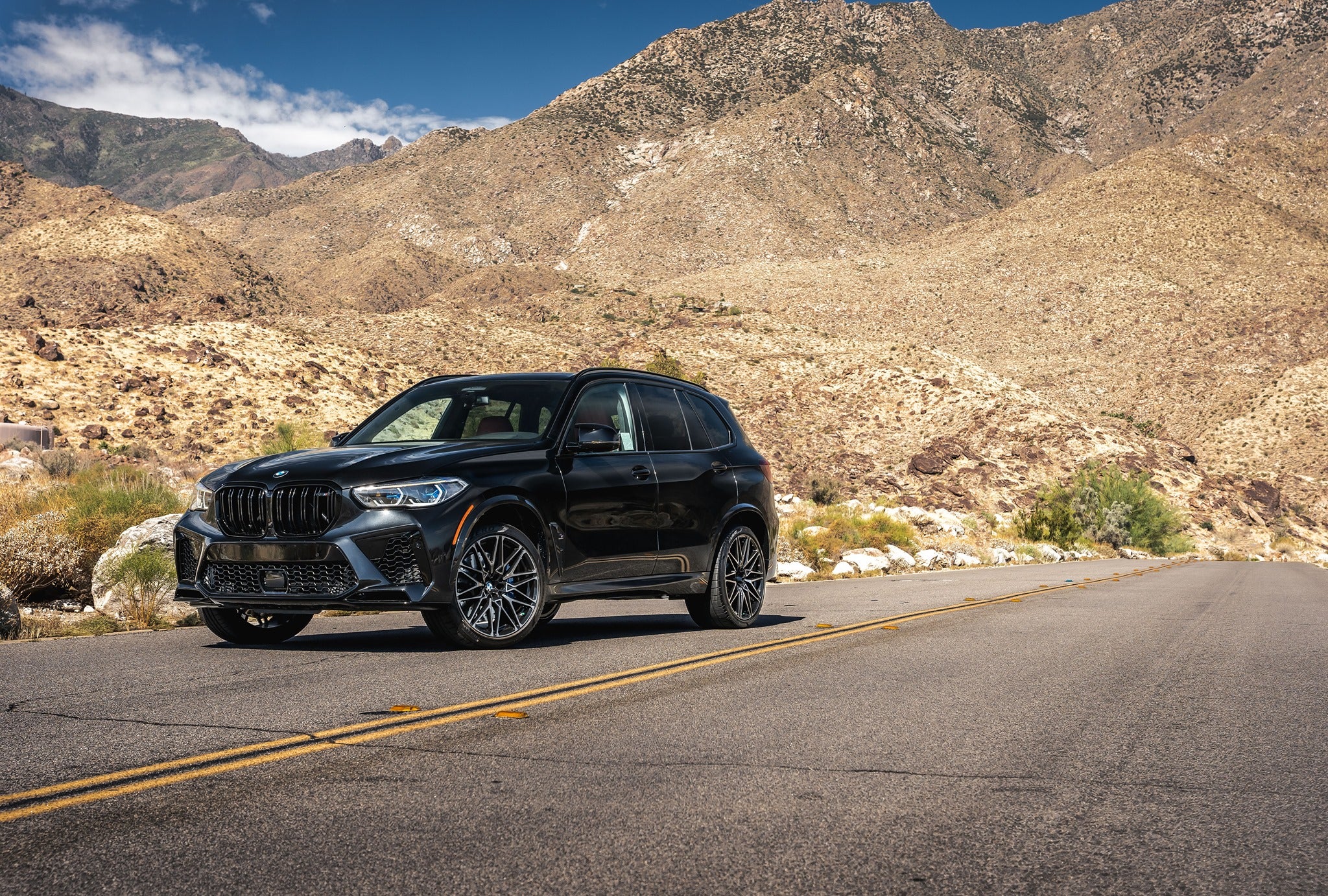
BMW X5 for Sale

What’s Next After EVs? Hydrogen-Powered Cars, Of Course

BMW Begins Testing of its Hydrogen Fuel-Cell Version of its Crossover SAV BMW has begun real-world tests of the i Hydrogen Next, an X5 paired with EV and hydrogen tech. BMW announced recently that it has started testing its hydrogen fuel-cell version of the BMW X5 crossover SAV, trying it out on European roads ahead of a small-batch production run for 2022. The BMW i Hydrogen Next made its debut at the 2019 Frankfurt Motor Show. The hydrogen SUV (aka SAV or Sport Activity Vehicle as BMW calls them) meshes a Toyota fuel-cell stack with fifth-generation electric-motor tech from BMW's latest battery-electric cars. Total system output is 374 horsepower, according to Green Car Reports. That comes close to the output of its most powerful gasoline inline-6 engine aside from the M performance models. The output is achieved using both the fuel-cell stack, which produces 170 hp, as well as a battery buffer - which kicks in when accelerating or “overtaking”, according to the website. more This is How it Works: Hydrogen is stored in two cylindrical tanks, including one that runs down the vehicle's centerline. (The other sits under the rear-seat area and is made from carbon fiber-reinforced plastic). A refill takes just three to four minutes, BMW says. The i Hydrogen Next is expected to be a low-volume model, but BMW appears committed to fuel cells for the long haul, according to media reports. This comes in an era when major auto manufacturers in general have backed off from the notion of creating fuel cells in passenger cars.  For instance, Toyota and BMW are collaborating on hydrogen cars. BMW planning to launch the i Hydrogen Next in the coming year. The i Hydrogen Next will undertake only limited production, as BMW plans to devote more energy to EVs in the coming years. An electric BMW sport utility is on the way in the form of the iX, and a hydrogen fuel-cell BMW is now on the way as well. The testing that began in June and is attempting to tune the  software controlling the car's driving and operating functions, according to BMW. That’s taking shape in the form of static tests of the fuel cell system and hydrogen tanks. BMW says it is also attempting to get practical experience using this drivetrain in real-world conditions. The i Hydrogen Next pairs BMW's eDrive technology already found in existing vehicles like the iX3 with a hydrogen fuel cell technology developed along with Toyota—one of the other major players in this field. The vehicle itself is largely based around architecture and tech taken from already rolled out vehicles, rather than being a model developed from scratch. The SUV’s 374 hp is the same as the most powerful inline-six gas engine in the automaker's lineup, BMW points out. "The energy stored in the performance buffer battery is generated in a particularly efficient way during driving by recovering energy from coasting overrun and braking phases," the automaker says. "The hydrogen needed to supply the fuel cell is stored in two 700-bar tanks made of carbon-fiber reinforced plastic (CFRP), which together hold six kilograms of hydrogen. Its precisely controlled reaction with oxygen in the fuel cell generates electricity, while water vapor is the only emission produced by the drive train." BMW has been experimenting with hydrogen fuel cell technology for decades and will continue to do so, the German automaker said in a statement. In fact, developing alternative powertrain technologies is a top priority for the BMW Group. The premium carmaker recently reaffirmed its commitment to following a carefully considered and systematic route to emission-free mobility. “This approach also includes the careful consideration of differing market and customer requirements as part of the company’s Power of Choice strategy. Customer centricity and the flexibility needed for this are essential in facilitating the breakthrough for sustainable mobility on the global stage.”

bmw ix for sale

A Legend in the Making: The BMW iX – Part 2

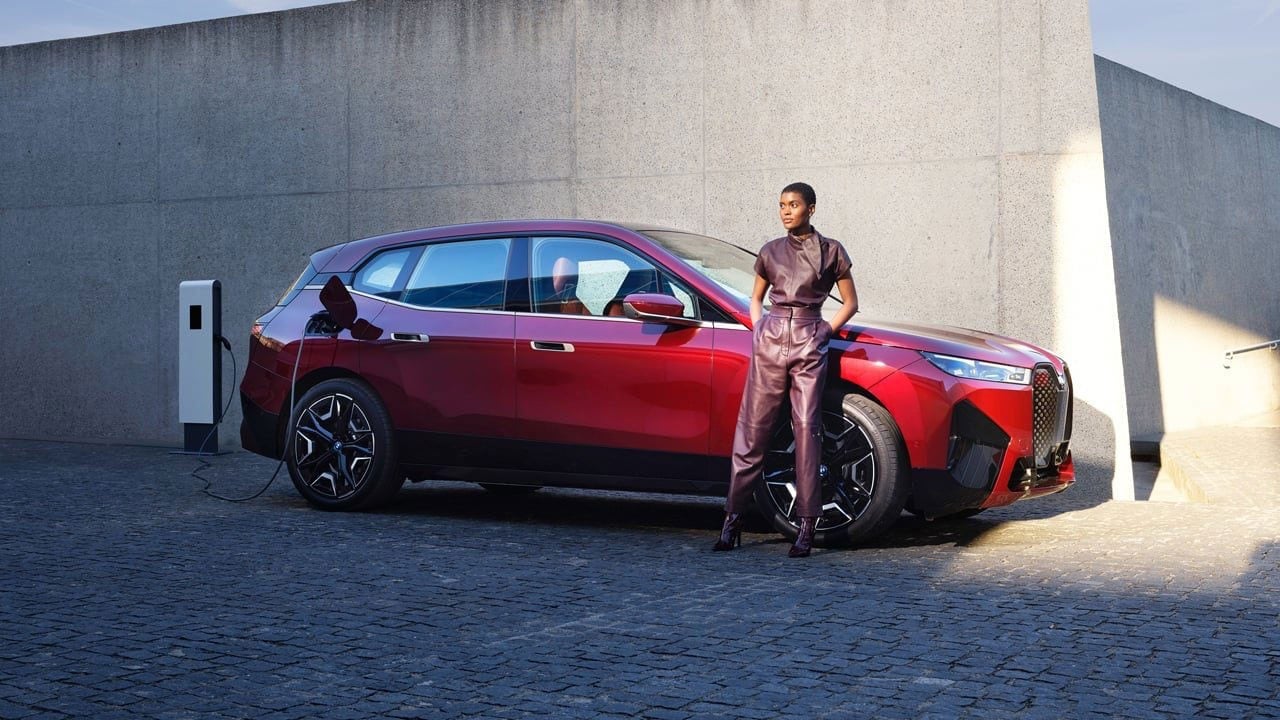
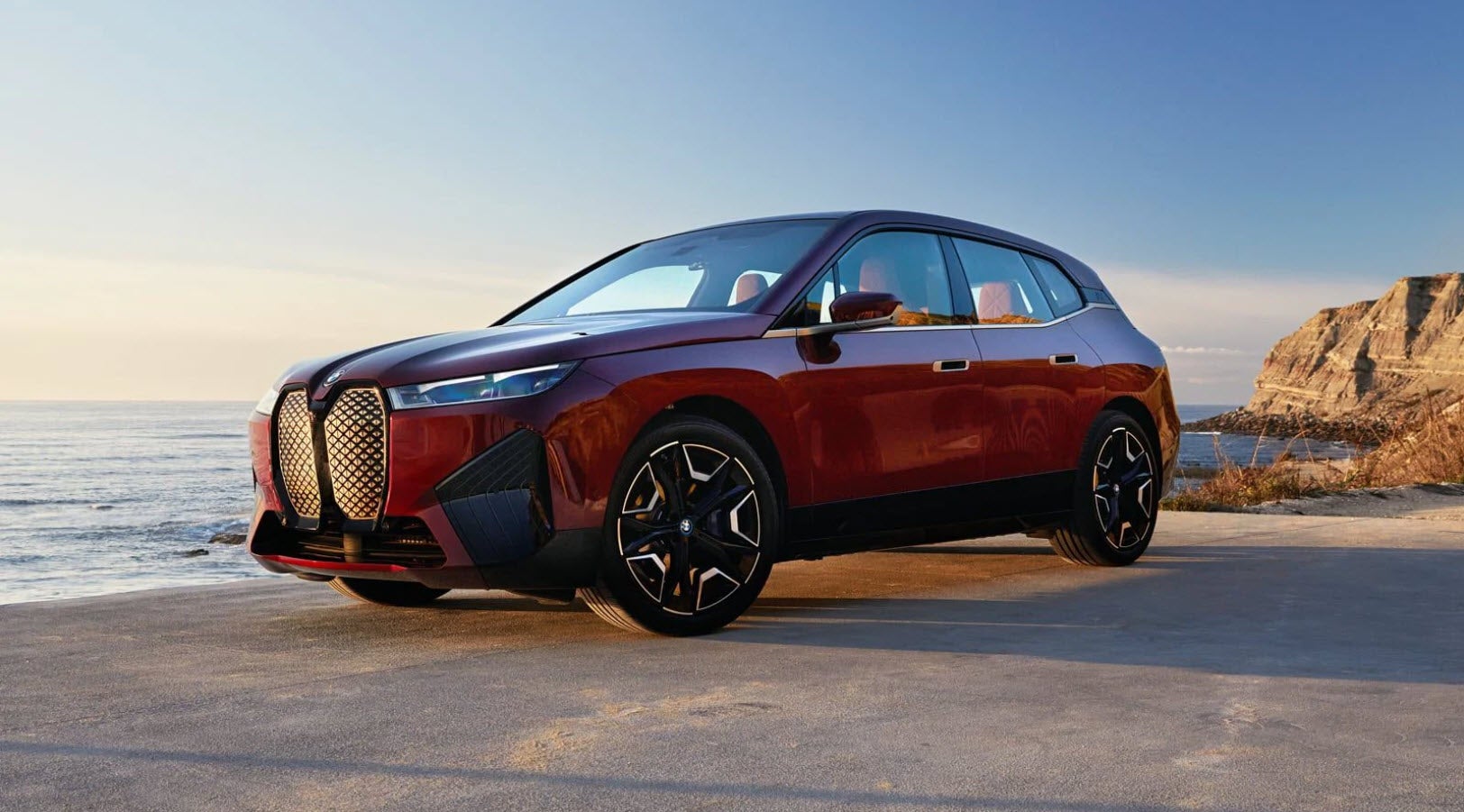
This Fully Electric BMW SAV is Setting the Industry Standard with a Host of Impressive High Tech Features The BMW iX is the German automaker’s first-ever fully electric Sport Activity Vehicle (SAV). Among other things, the iX has two powerful electric motors putting out a total of 500 horsepower. With one electric engine at the rear axle and one at the front – both drawing from a high-voltage 100-kWh battery - the iX can take you from zero to 60 in 5.0 seconds flat and provides an impressive range of 300 miles. The BMW iX also comes with DC fast charging capability as standard and can charge the battery with enough power to provide 75 miles of driving range in just about the same time it takes to listen to Stairway to Heaven. The muscular yet streamlined exterior houses a tech-filled cabin that includes an attractive curved digital instrument panel screen. But the tech is not confined to the interior. With these streamlined contours and high-tech engineering, the iX redefines the concept of electric vehicle. A couple of weeks ago we looked at several other features that make this one of the hottest EVs coming on the market Optimized Aerodynamics for Increased Range Thanks to Efficient Dynamics BMW has reduced fuel consumption and emissions for several years. In the BMW iX this plays out in a new way with an ultra-efficient electric drive system as well as its aerodynamic properties and light weight. In other words, reduced air resistance and intelligent lightweight design help give the car its expansive range.   That reduction in drag also improves handling and even the driving experience itself.  This is due to the state-of-the-art bodywork structure with an aluminum spaceframe and pioneering Carbon Cage. The positioning of the A-pillars much further forward is one main difference from other BMWs. And the  compact design of the eDrive technology gives you more room inside.  The low drag is made possible by the streamlined body, the tapered glasshouse and flush-fitting door handles, among other things. All of this gives the iX the most outstanding aerodynamics for its class. more Lower Air Resistance and Weight: Air Performance Wheels Twenty-inch light-alloy wheels with an aerodynamically optimized design are standard on the iX.  Moreover, mostly enclosed surfaces bring about an effective reduction in the air turbulence produced around the wheels. And optional 21-inch and 22-inch Air Performance Wheels further reduce drag in a very high tech way. These wheels combine optimized aerodynamic properties within the elegance of a V-spoke aluminum wheel.  Air Performance Wheels are made of an aluminum base wheel with customized inserts between the spokes. The result is a flat design that provides smoother airflow. And they weigh 15 percent less than conventional light-alloy wheels. All of this combined helps increase range by as much as 9 miles. Light Body The super light aluminum spaceframe body structure of the BMW iX is a first for its segment. The carefully crafted materials increase body rigidity and crash safety while keeping weight as low as possible. The Carbon Fiber Reinforced Plastic components are light and rigid in the body’s side, rear and roof areas, forming a central element of the safety concept for the  “BMW iX passenger cell.” That means the side frame, rain channels, roof frame, cowl panel and rear window frame combine to form a “Carbon Cage.” The Carbon Cage has evolved from the Carbon Core used in the 7 Series. Interior The interior of this electric BMW is not only super roomy but filled with high-end materials including newly developed seating and a single-piece panoramic glass roof, proving plenty of room for five seats. It’s all about the needs of you and your passengers. And the employed eDrive concept means there is no center tunnel, contributing to the open feel and plenty of legroom in front and back. The well-crafted center consule provides plenty of storage space, something you might not expect in a sporty car. Displays and controls are refined down to their essential nature. This makes for a minimalistic relaxing driving experience free of clutter and fuss. The “shy tech” in the interior includes hidden speakers, air vents, radiant heated surfaces and the discreet recessing of the BMW Head-Up Display’s projector into the instrument panel. “We designed the BMW iX from the inside out,” says Domagoj Dukec, Vice President BMW Design. “In the process, we took particular care to create a modern, warm and minimalist interior design with a very spacious feel.” Modern Luxury Expect nothing less than modern, even space-age, luxury as the iX sets the minimalistic tone for the future of electric cars.  The door panel layout includes a diagonal split using different colors and materials. Door pull-handles are seamlessly integrated into the diagonal accent strip that houses the button for activating the electric door opening function. Even the buttons for adjusting the seat position are simply and ergonomically located on top of the front doors while memory buttons are positioned directly alongside. The passenger-side armrest include a compartment for holding a mobile phone. The  audio system’s midrange speakers are embedded beneath the door panels’ fabric trim. Newly designed driver and front passenger seat include integrated head restraints for a very sporty look. And for the first time in a BMW you can integrate speakers right into the seat structure with sound  sources positioned beneath the surface in the head restraint and lumbar support areas. All seats have multi-way electric adjustment as well as seat heating. Also available are seat ventilation and massage functions Lounge-Style Rear Seating Ambience Three passengers can fit on the rear bench seat and the two outer seats include built in head restraints while the center seat has a restraint that can be folded down as needed. There is plenty of legroom and an open airy feeling that reinforces the lounge ambiance and overall comfort. The BMW  Travel & Comfort system integrated into the front seats can be used by rear passengers to attach coat hooks or hold tablet devices. Slim Instrument Panel With Curved Display The skinny instrument panel is covered in either standard Sensatec, optional microfiber fabric or natural leather is another show stopper inside the iX. The instrument panel rises up toward the front of the vehicle giving it a futuristic appeal with a fully digital display. This is the debut of the curved display and it doesn’t disappoint. It’s held seamlessly in place by a supporting structure that is nearly invisible to passengers, so it appears to be floating or freestanding. The high-definition display technology employs reflective glass and gives it a clean-line look.  “The BMW iX is the first model from the BMW Group to feature the impressive high-resolution Curved Display, which is far larger and sharper than the displays in our current models,” remarks Frank Weber of BMW Board of Management. “As a result, the BMW iX interior points the way ahead for cockpit design in future BMW models.”  The display and its curving lines serves as the central screen control element. But it’s a new spin on the driver-centric design of BMW cockpits thanks in part to bringing together the 12.3-inch driver Information Display and the center 14.9-inch Control Display to form a single unit angled towards the driver. Brought together, this driver-focused display optimizes how information is displayed and makes the intuitive touch control even simpler to use. Additionally, the display section can still be clearly viewed and easily operated by the front seat passenger. BMW Head-Up Display with Frameless Projector Integration New for 2021 the Head-Up Display projector is flush inside the instrument panel. There is no frame, which allows it to be hidden. The information projected by the BMW Head-Up Display includes your vehicle’s speed, speed limits, status indicators and warnings from the driver assistance systems, among many other pieces of information. You can adjust the angle, height and brightness of the display.According to BMW: “The combination of the Head-Up Display and the Curved Display’s fully digital screen grouping represents an excellent solution for conveying information in any given driving situation. The projection system in the BMW iX is designed so that the driver perceives the Head-Up Display graphics as being approximately ten feet in front of the vehicle. This projection distance allows information to be absorbed with the greater ease as it enables the driver to assimilate readouts accurately without having to adjust their gaze in normal driving situations.” Automatic Climate Control with New Controls and Integral Nanofiber Filter You have access to  2.5-zone or optional 4-zone automatic climate controls. High tech nano-filter technology purifies the air and pre-heating and pre-conditioning functions are standard. “Nanofiber filter technology is more effective than normal filter systems, removing virtually all particles from the interior air in a matter of minutes when air recirculation mode is switched on. Drivers are able to use the My BMW app to activate the air conditioning system’s ventilation function before the journey starts in order to purify the air in the cabin quickly and thoroughly,” according to BMW. Radiant Surface Heating and LED Interior Lighting This is the first BMW to offer you optional radiant surface heating for the instrument panel, glove compartment, door panels, center armrest and even the steering wheel to create a comfortably warm interior for driver and passengers alike. All inside lighting is LED and controls have white backlighting, which makes it easy to locate. Sound System The Harman Kardon sound system is standard and gives you a top notch listening experience. It comes with a 7-band equalizer, eighteen speakers, 655 watts of audio power and more. You also get four built-in speakers in the rear head restraints that complement five midrange and five tweeter speakers. Two central bass speakers and two additional subwoofers located under the rear seat ensure a powerful sound performance. The tweeters sit behind perforated grilles and midrange speakers are hidden beneath the door panels’ fabric trim of this BMW electric car. Some of the other features that make the this BMW electric vehicle great: Integrated interfaces, and unobtrusive “Shy Tech” create naturalistic interactions in a digital world. A drivetrain generates more than 370 kW/500 hp and allows a range of over 300 miles of range. New charging technology that allows DC rapid charging with an output of up to 200 kW. The battery can be charged from 10 to 80 percent of its total capacity in less than 40 minutes. Comfort Access technology that sets off a welcoming light display and automatically unlocks the doors for you. A hidden world of interaction and functionality at your fingertips  thanks to Shy Tech features that are subtle yet engaging. Access to the nation’s largest fast charging network through the BMW Charging app and EvGo. iDrive 8 software that allows for customization of menus and graphics while providing a voice-activated assistant. A 14.9-inch infotainment display that combines with a 12.3-inch digital gauge display inside the high tech dashboard design, where Apple CarPlay and Android Auto are standard as is Wi-Fi hotspot with a 5G cellular. An 18-speaker Harman/Kardon stereo system is standard or you can upgrade to a 30-speaker Bowers & Wilkins system. Twenty-inch alloy wheels that have been optimized for aerodynamics are standard and you can upgrade to  21- and 22-inches.

Luxury Car Accessories

Here are 11 Luxury Car Accessories You Can’t Live Without

When it Comes to Luxury Car Accessories We Say - Go Big or Stay Home! You’ve got the car of your dreams and you’ve tricked it out with some upgrades that grab attention and make driving even more fun and easy. But why stop there? We’ve dug up eleven of the most luxurious car accessories – from a few inches long to something the size of a refrigerator (in fact it is a refrigerator) – to complete your overall driving experience in 2021. Diamond Studded Ferrari Key Encrusted with more than 1,000 diamonds totaling more than seven karats, the diamond-studded Ferrari key takes be-dazzling to the next level. This is luxury car accessorizing in the extreme. Diamonds make a glittery statement like no other gem. The Ferrari car key can actually be studded with precious metals and a multitude of gemstones. The bespoke Ferrari key was created by the venerable SP Green & Co. of Great Britain and is being offered in several options. A total of 1,160 pieces of a rare variety of diamonds - VVS to flawless variety - has been encrusted on the key. Don’t like diamonds? Simply choose another gemstone. The options for customization are endless, but the idea is to enhance the aesthetic appeal of the key and make it even more exclusive. The bejeweled Ferrari car key is priced at $23,147. more Rolls-Royce Starlight Roof This one has gotten a lot of press and food good reason. It’s simply stunning. When you buy the Rolls-Royce Phantom, you have a few options for your roof. If you love the stars, then you can choose LED lights in your roof that look like stars. Rolls-Royce, of course, produces some of the most iconic and luxurious motor cars in the world. The Starlight Headliner features a universe of fiber-optic lights mounted inside the ceiling of the car with a design that looks like constellations. The headliner is also available on the Wraith coupe and the Ghost sedan. Each headliner is created by hand and tailored to the owner's whims. In fact, Rolls-Royce can mimic just about any constellation. So if Orion’s Belt is your thing…not a problem. Big Dipper your favorite? That’s a go! The Starlight Headliner is not only aesthetically pleasing, but also an effective way to light your cabin. The brightness of the Starlight Headliner is in fact controlled using the car's infotainment system. According to Rolls-Royce, the headliner takes two craftspeople an average of nine hours to create by hand, although more complex designs can take up to 17 hours. Each headliner can feature anywhere between 800 and 1,600 fiber-optic lights. With your own romantic universe within the confines of your Rolls-Royce your special night just got a little more special. Porsche Design Chronograph The Porsche Chronotimer Series 1 in Polish Black resembles the original designs from the automaker’s Porsche Design circa 1970s. And if it looks familiar to you that maybe due to the fact that it’s based on the first run Porsche watches from back in the day. The Chronograph comes in sapphire crystal dial cover with a sapphire case back, a polished titanium case, and black titanium, carbide-coated bracelet. It’s made in Switzerland, of course. Early issues cost half what new ones do today. Deadstock vintage ones go for closer to $10,000. Expect these to appreciate similarly. Porsche Design Luggage Looking for bags that are sleek, functional, and low-key and happen to match your Porsche? This locking set comes fully equipped with ergonomic aluminum grips and lightweight side bars. There are also four rotating wheels, and two large, main compartments with a strong mesh divider. Ferrari Scarf Think of it as lowkey Ferrari. This soft jacquard knit scarf features the famous Ferrari shield repeated in a big pattern above a small fringed edge. You need this for those days on the Mediterranean, your top down and the wind in your hair. And it’s made in Italy, of course! Ferrari Umbrella Now that you have the scarf you simply must have the umbrella? Rainy weather no match for this snazzy umbrella with a rubberized grip, sturdy aluminum structure, and a carbon-fiber effect on the outside canvas that helps to block UV rays. It fits right in the trunk. Bentley Fountain Pen For the pen collector who has everything why not an $800-plus Bentley Fountain Pen? This one was created by the venerable Italian brand Tibaldi and features an 18-carat solid gold nib and an ultra smooth ink flow. It’s the perfect writing instrument to complement your Mulsanne or Bentayga. Choose from colors that include “Silver Tempest,” “St. James Red,” “Silverlake Blue,” and “Beluga.” Bentley’s Mulliner Refrigerated Bottle Cooler You simply must have this luxuriously appointed refrigerated bottle cooler for your Flying Spur.  Your rear-seat passengers will be delighted when they discover storage for a champagne bottle in a canted position, a bottle stopper and two bespoke champagne flutes – everything hidden behind beautifully trimmed frosted glass. The flutes were designed so that the base of the glasses mirrors the design of Bentley wheels. They can also be placed in specially designed flute holders in the center console armrest, for secure storage between sips even if you hit some bumps in the road (not that you would feel it with all that Bentley suspension). When not being used, the bottle cooler and glasses can be stowed and concealed. Each refrigerated bottle cooler is made to order, hand built and trimmed in the Mulliner workshop in a process that takes highly skilled artisans 15 hours. Bentleys are luxurious. So are their accessories. They wouldn't be Bentleys if they weren't. It takes Bentley's craftsmen 15 hours to make the cooler setup. No wonder the company charges $10,135 for each one installed. The options list, as you can imagine, does not start and end with the cooler. You can also get matching veneer panels, quilted stitching for your seats, scent atomizers in Stirling silver, and a leather-trimmed storage compartment for jewelry so that your cooler doesn’t look out of place. Colored BMW Grilles Add some iconic BMW M colors to your BMW with a simple, affordable accessory: Colored grille insert trims. The trims represent the light blue, dark blue, and red shades found in the M logo, fitting over the standard kidney grille on various BMW models. They simply clip on for installation. The McLaren Watch Even as it celebrates its quarter century birthday, the McLaren F1 is still something extra special in the automotive world. As part of the celebration the F1 now comes with an optional special edition TAG Heuer 6000 Chronometer with the roughly $1 million purchase price. A total of 64 of these spectacular watches were produced - one for each McLaren F1 street version made - each featuring the stylized “F1” and “V12” logotypes that match the car. There’s also the chassis number of that particular buyer’s car included on the watch. Factoid for car nerds: TAG (short for Techniques d’Avant Garde) holds a 25% stake in the McLaren Group, and is a longtime sponsor of the McLaren Formula 1 team. The Bentley Clock With the Bentley Bentayga, you get to choose a clock that is way more than just a clock. And with a price tag of  $160,000 it had better be all that. Bentley brought Breitling in to create a clock that's actually worth the money. Known as the Mulliner Tourbillon, the Bentayga's optional clock is the masterpiece of timepieces. Fully mechanical with no electronics inside, the Mulliner Tourbillon clock is self-winding. An electric motor rotates the clock occasionally to ensure it never runs out of power.  Beautiful to look at and beautifully engineered you could become mesmerized by this clock. Not only was it designed specifically for the dashboard of the Bentley Bentayga, but it's also made of solid gold and has about 12 diamonds embedded in its face. We hear that Queen Elizabeth was the first customer and we’re not shocked by that news. Bentley Driving Gloves Designed just for her, these soft and supple leather gloves have a lowkey design that includes a keyhole back, perforated fingers, and a Bentley B stud closure. The closure matches the wheel centers on the Continental coupe. Choose from beluga (black) or tan and beluga.

2021 bmw ix for sale

A Legend in the Making: The BMW iX

The BMW iX is the Fully Electric SAV is Setting the Industry Standard for EVs The BMW iX might very well represent the future of the automotive industry. It’s the German automaker’s first-ever fully electric Sport Activity Vehicle. As such, the iX redefines the concept with its streamlined contours and high-tech engineering. Along with an expansive 300-mile driving range a bevy of other unusual features make this one of the most exciting EVs on the market. For starters, two electric motors provide full-time all-wheel drive while the carbon-fiber-reinforced plastic body panels help save weight. And despite its lightness overall, the cabin is quite spacious and chocked full of state-of-the-art technology features, including a futuristic-looking curved digital instrument panel screen. Let’s check out some other features that make this one of the better electronic vehicles – starting at $84,195 - hitting the market soon. The Engine Two versions of the iX are being offered: the xDrive50 powered by a pair of electric motors that make a total of 516 hp and come standard with all-wheel drive. A high-performance model, the M60, will be released later and offer more than 600 hp. The iX will come with optional adjustable air suspension and a rear-wheel-steering system.  On the first model you can get from zero to 60 in 4.6 seconds and hit a top speed of 125 mph. Not bad for an all electric vehicle! more Infotainment/Technology The release of the BMW iX heralds the start of the new version of iDrive, the software and infotainment platform that has been at the center of the BMW driving experience for over two decades. This, the eighth version of iDrive, will preside on a new curved display t hat merges  a 12.3-inch instrument cluster and the central 14.9-inch infotainment screen into a single unit. While the size of the screen varies depending on the model, they all bring with them the illusion of floating at the front of the interior. Additionally, the car’s onboard computer can process 20 to 30 times the data volume of previous models, according to BMW. That’s around twice the amount of data of previous models. This means a higher level of autonomous driving thanks to fusion of the iX’s sensors. Advanced driver assistance systems include lane keeping, blind-spot detection, automatic emergency braking, and adaptive cruise control.  The Curved Display’s position facilitates use of the screen’s touch functionality in a way that is intuitive and natural for the driver.  The remaining control panel design employs “shy tech” to reduce workload to the very minimum. There are no conventional buttons. Instead, a control surface with “active haptic inputs” subdivided by feeler bars makes it easy for you to select the iDrive menus, driving modes and other functions.  A center console armrest is available in a heated version and doubles as a lid for an illuminated storage compartment. The rear console is finished in a high-gloss black trim. The Hexagonal Steering Wheel A hexagonally shaped steering wheel comes with a rocker switch for gear selection and meshes well as the BMW Curved Display. It’s all part of the next-generation of BMW Operating System which makes for a futuristic-feeling, seamless exchange between driver and car. The Panoramic Sunroof The iX features an optional panoramic sunroof with electrochromic shading as an option. It’s an expansive single piece transparent surface that spans the whole interior - the largest glass roof ever installed in a BMW. This high-tech sunroof gives the interior an open and airy feel, almost like a space-age cockpit, while providing plenty of headroom due to the fact there’s no need for an interior liner. The roof not only looks cool but it features electrochromic shading that can be activating with a button to shield you and your passengers from direct sunlight. The glass roof of the iX is the first of its kind in the auto industry to use Polymer Dispersed Liquid Crystal technology for shading the interior. That means the roof's transparency is altered by applying a voltage to the middle layer of film, which allows liquid crystals dispersed as droplets in a polymer matrix to become aligned by electrical energy to allow rays of light to pass through into the interior unimpeded. When “de-energized” crystals instantly distribute themselves in a uneven pattern that creates the effect of shade. LED Headlights and BMW Laserlight The iX features the thinnest headlights ever! At least for BMW. You get daytime driving lights with integrated turn signals all within a new design that resembles two-dimensional strips along the upper edge of the headlight units. (The iX comes with full-LED headlights as standard).  The lights are recessed back and only become visible when they are switched on. And optional: the current generation of BMW’s Laserlight. This headlight puts off low and high beam from both the inner and outer light sources. Doors with Integrated Flush Handles and Frameless Windows In very Bond-like fashion, the iX’s electric door handles fit flush into the door surface. Created in contrasting colors, indirect illumination of the handle recesses provides the handles with a lush backdrop. Thanks to the latest generation of the BMW Comfort Access System, the doors lock and unlock automatically as the owner approaches or walks away from the car via the signal sent to the car from the remote control or from the BMW Digital Key on your smart phone. Additionally, BMW is unveiling doors with frameless windows as part of a large iX Sport Activity Vehicle (SAV).  This design feature showcases the sportiness of the iX and gives a sense of flow and liquidity to the side of the vehicle. The effect is further highlighted by the high-gloss black trim. Aerodynamic Exterior Mirrors The iX exterior mirrors have an innovative design that helps to reduce wind noise while optimizing aerodynamics and improving visibility all around the car. The mirror bases attach seamlessly to the lower edge of the side window surround creating this perfectly low-noise aerodynamic feature. Each of the mirror caps is painted the same color as the body while the lower edge by the mirror base is painted  in high-gloss black, creating contrast. Modern Minimalist Design A distinct lack of seams and streamlined contours lend the exterior an air of futuristic sophistication. Aerodynamics are enhanced by the flow of air over the roof all the way to its trailing edge. It’s an effect that is augmented by a diffuser element in the rear bumper.  Similarly there are no separation seams in the tailgate, which extends across the rear, highlighting the aerodynamic nature of the vehicle. A rear-view camera is integrated into the black ring of the large BMW logo positioned in the center of the tailgate and is cleaned automatically by an integrated water spray system. Shy Tech Exterior Along with the “intelligent design” of the kidney grille (more on that later), the iX has an array of discreetly positioned cameras and sensors  to help the driver in all road conditions. Distance measurement sensors blend seamlessly into the black body edging at the front and rear of the automobile  The underlying principle of such “shy tech” is that the technology stays in the background and only becomes apparent when the relevant functions are needed and triggered. For example, the front kidney grille is actually an “intelligence surface” that houses radar, cameras and several other sensors and is able to take on digital functions. There’s even a “self-healing” effect thanks to a polyurethane coating that reduces the grille’s susceptibility to damage. The self-healing effect on its surface can repair minor scratches within one day at room temperature or in five minutes if exposed to warm air, according to BMW.

BMW Electric Vehicles Soundtrack

When Fake Engine Sounds for BMW Electric Vehicles Just Don’t Cut It

Oscar-Winning Composer Creates Lush Soundscape for New BMW Electric Vehicles Certain BMW electric vehicles are quiet – so quiet they needed to have some sounds added back in. But rather than simply replicating the sound of a gasoline engine (as other electric brands are doing), BMW decided to take it one step further. Drivers of BMW’s iX electric sports activity vehicle will enjoy an interactive “soundscape” by  famed movie composer Hans Zimmer instead of traditional engine sounds. The Academy Award-winning composer has created scores for Pirates of the Caribbean, The Lion King and Inception so why not create lush sounds for one of Germany’s most iconic car brands? more "It's like when you're sailing and you hear the wind in the sails," said BMW head of design Domagoj Dukec in a recently recorded talk. "It doesn't recreate the sound of the engine. It's really a completely new symphony." The sounds, which will respond to the driver's actions along with the automobile’s performance and external conditions, will be played through 24 speakers throughout the auto’s interior. The sounds include an “electronic interpretation” of the sound of wind rushing over the car. Some speakers are even embedded into the driver's seat to allow for an even more immersive experience as you zip down the highway in your luxury SAV. "It's more like you can almost compose the music with the way you drive," Dukec explained. "It's like you create your own music." The soundscapes will be included in the BMW iX SAV as well as the i4 Gran Coupe, both of which are launching in the fall. "Design so far has been quite superficial. It was just seen from a visual point of view," Dukec added. "But human beings, they have many more senses – five senses – and seeing is just 20 per cent. If you want to really create this joy of an experience, you have to somehow address more than just one sense." "It opens up a completely new horizon." BMW has been working with Zimmer for over two years to create a library of bespoke sounds for its growing line of state-of-the-art electric vehicles. Zimmer is known for crafting timeless, instantly recognizable scores that have gleaned him Oscar nods. He’s made music for the Dark Knight trilogy, Interstellar and a host of other blockbuster films. Zimmer's electronic sound of air passing over the car will be combined with a unique composition created by Zimmer that responds to the car's three driving modes: core, sport and efficient. Sounds as well as volume will change according to the speed of the vehicle. "We have different modes, so you have different experiences," said Dukec. "Suddenly you are not just connected to the functional sound of your engine; you can create something completely free. It opens up a completely new horizon." In a teaser video for the iX, there’s a futuristic zooming noise similar to some of the experimental compositions that Zimmer has previously created for movies. Zimmer has also worked with the company's acoustic engineer Renzo Vitale to create a soundscape for its Vision M Next concept car. The collaboration with Zimmer is part of a recent broadening of BMW's design strategy towards creating a more user-centered experience besides focusing on performance and technology. "We are not designing cars any more in the future," he said. "For us, it's very important that we are designing the experience of joy." The cockpit of the BMW iX boasts streamline design including a central wooden console. The interior is designed to resemble a home or luxury hotel room, according to Dukec. "The exterior should express a shell protecting this very precious interior space of the iX, which we believe is a very new approach in the car industry," he explained. "It shouldn't look like a machine, it shouldn't look like a cockpit of an aeroplane, it should look more like a boutique hotel." As such, the car's impressive tech features are strategically concealed throughout the cockpit to blend seamlessly with the design. This “calming” technology includes buttons  embedded into the central wooden console and speakers hidden behind textiles. For his part, Zimmer compares creating the BMW i4 soundscape with how he approached the 2018 war movie 'Dunkirk.' He explains that he uses a technique called the “Shepard tone” (named after scientist Roger Shepard) which creates the auditory illusion of a tone that seems to continually ascend or descend in pitch, yet actually gets no higher or lower. That’s in sharp contrast to the thinking behind the 'soundtrack' for the forthcoming i4 Gran Coupe where the sound is more open ended. “Here it's the sense of moving forward,” Zimmer has said in a recent interview. “It's trying to get somewhere. It's the idea that things can be infinite. You are moving forward, but you never get there. A good piece of music transports your endorphins.” Sounds like a joy ride to us! Want to see more of our BMW Electric Vehicles? Check out our BMW of Palm Springs store below: BMW of Palm Springs Check out indiGO Auto Group's electric vehicle inventory below: Electric Vehicle Inventory

Contact Us

Fill out this form below and we'll contact you shortly
*Required Fields